Why Owning Your Own Website Matters
What can go wrong when a business does not officially own its domain, hosting, and online accounts, and why that ownership should always stay with the client.
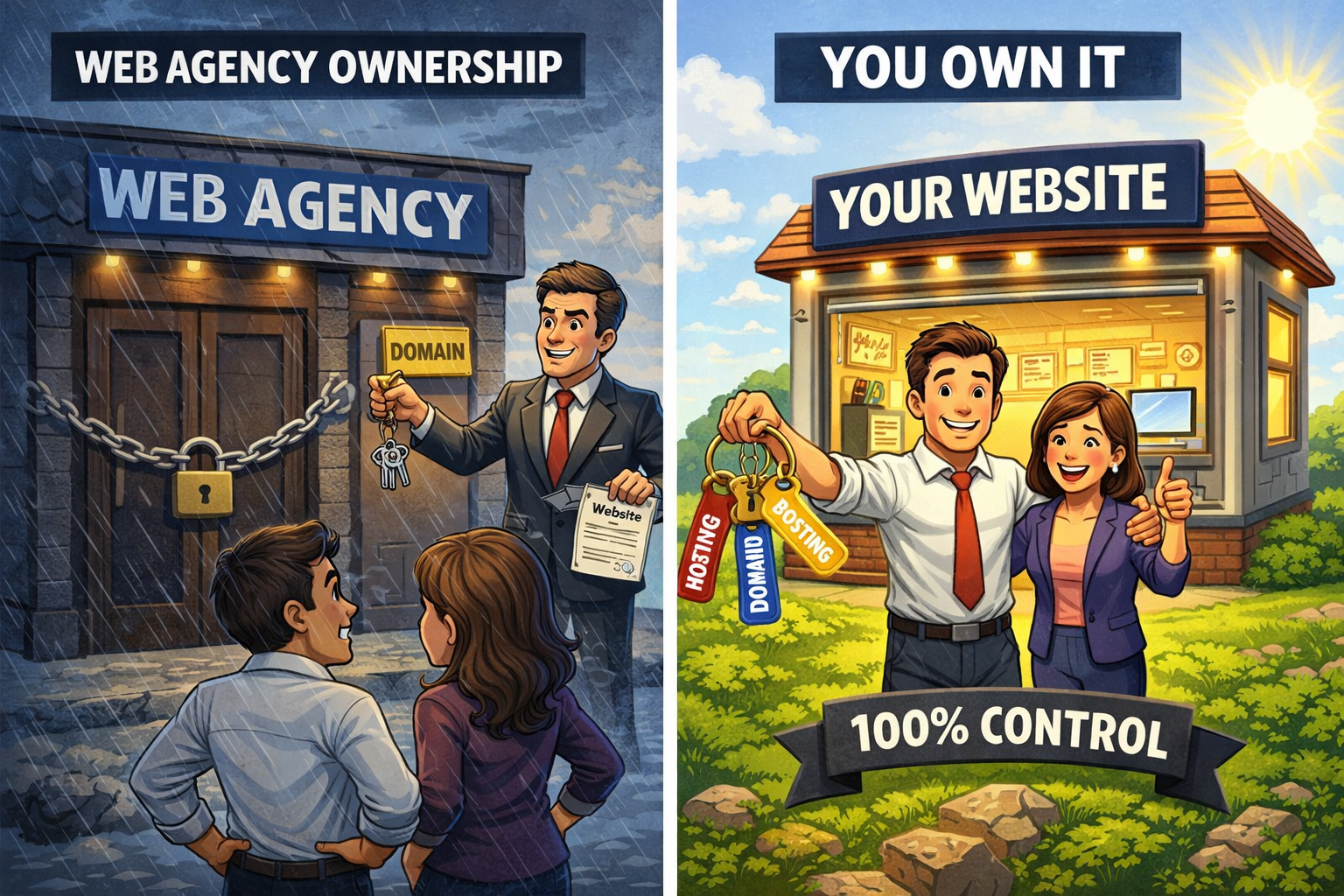
What happens when you do not actually own your own website?
You can suddenly lose access to things your business depends on:
- Your Google Business Profile
- Your web hosting
- And even your own domain
Why this matters
For one of my clients, everything had been set up through an agency that later went bankrupt.
He was never the official owner of his own digital presence.
That meant the business was left in a position where core assets were tied to a third party instead of to the person who actually needed them.
The consequences
This kind of setup creates avoidable problems:
- Lengthy verification processes with Google just to regain access to the Business Profile
- The domain and website being lost
- Unnecessary stress
- Additional costs
- Lost time
All of that can happen even though it is the owner's business.
My approach with clients
That is exactly why one thing is extremely important to me: I guide my clients step by step and support them so they can register their domain and hosting in their own name.
The ownership should always stay with the entrepreneur.
Because your digital presence is a business asset. It should not depend entirely on a single agency, freelancer, or service provider.
The practical rule
If you are paying for a website, make sure these things belong to you directly:
- Domain registration
- Hosting account
- Google Business Profile access
- DNS settings
- Website admin access
Agencies and freelancers can still build, manage, and support the site. But the legal and operational ownership should stay with the client.
That makes handovers easier, reduces risk, and protects the business if a provider disappears.